
Loading titles…
Documentary
Names of Revolution recalls the memories of those who participated in the struggle to rewrite the history of the “Busan-Masan Democratic Protests,” which has been under-represented in modern Korean history. As the then college students, seamstresses, mold technicians, combat…

No cast information available.
Oh Minwook’s Eternal Brightness, adapted from Jo Gapsang’s novel Eye of the Night, narrates the past and the present lives of the characters who have lived through the contemporary history of Korea, from the Korean War in the 1950s to the Busan-Masan Democratic Protests calling for the Park Chung-hee administration’s Yushin regime in October 1979.

This documentary celebrates the life of former President Kim Dae-joong, who fought for democracy in South Korea and peace in the Korean Peninsula. It marks the 10th anniversary of his passing and covers his challenging journey, from his childhood on an island to his imprisonment, exile, near-death experiences, and ultimately becoming the president.


The Lotte Giants is a huge part of Korean professional baseball's history. 30 years have passed since their last win in 1992. Now, they are tired of self-dissing mixed with resentment against the club and players. But, why can't they leave even though they know? Why won't the 'Talde effect' work? Why do they get excited when spring comes? Why are they so sure the win rate will be over 50%? Now here, nevertheless, with fans moving to Sajik Baseball Stadium, the 40-year history of the Giants unfolds centered on former and current Lotte Giants players.
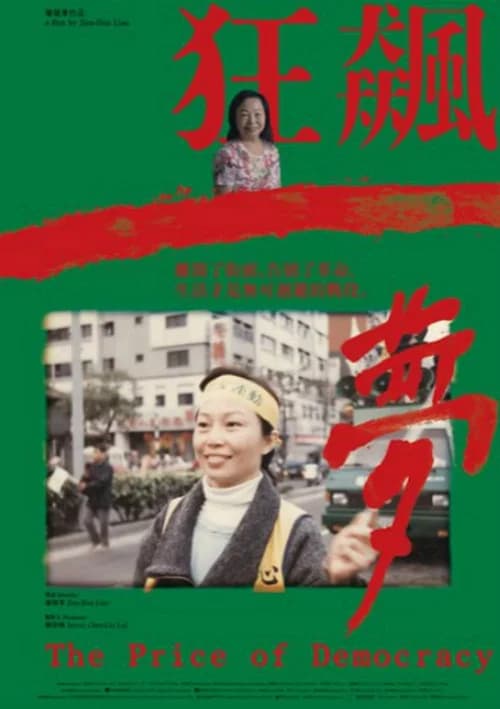
The expressions of democratization are usually interpreted by elites from two different parties but neglect the real faces/ life of every individual among the resistance rally. The director (a confused twenty-something) looks back upon the 40-year-history of democratization of Taiwan through the life experiences of two old-timers (who are grass-root rebels). He attempts to discover what causes their actions and decisions to be lefties, and what are their limitations.

Still and All is a story about the souls living beneath the Yeongdo Bridge in Busan. Yeongdo and its bridge offer a historical space with lingering traces from the Japanese colonial era to the Korean War. The people under Yeongdo Bridge, reconstructed in 2013 after 47 years, are driven to move when the vicinity around it is designated a Special Tourist Zone.

Choi Jinbae from Korea and Nyein Thazin from Myanmar are an international couple. They married seven years ago in Mandalay and, after a ceremony in Korea, planned to return. But COVID-19 left them stranded in Seoul. One day, a photo arrives from Myanmar showing a village destroyed by the coup. Urged by fellow Myanmar people to share their country's reality with the world, Choi picks up a camera. An ordinary family's life is suddenly thrust into questions of pain, solidarity, and the ethics of bearing witness.
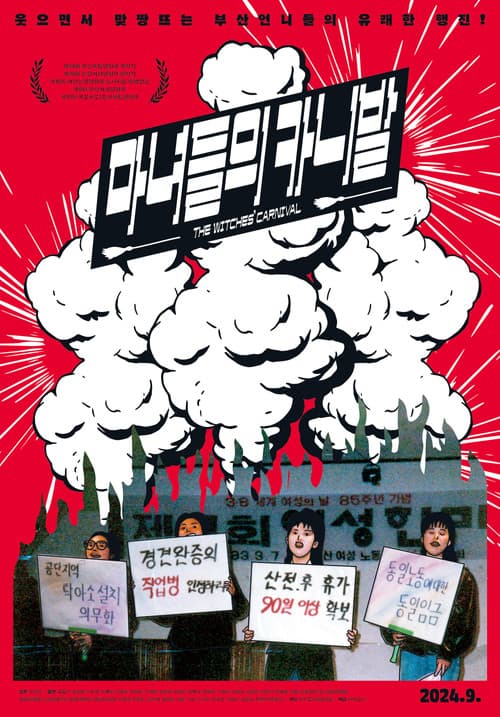
In 1988, workers at the 'Busan Working Women's House' study the Labor Standards Act, receive overdue salaries, and take menstrual leave and pre- and post-partum leave. As the subdivided women's movement develops, Busan women also take to the streets to fight against domestic and sexual violence. Around the same time, female students in Busan and South Gyeongsang Province actively campaigned to create school rules to regulate sexual violence in universities. In 2000, Pusan National University's first feminist festival


