Loading titles…
Documentary / War & Politics
Victory at Sea is a documentary television series about naval warfare during World War II that was originally broadcast by NBC in the USA in 1952–1953. It was condensed into a film in 1954. Excerpts from the music soundtrack, by Richard Rodgers and Robert Russell Bennett, were…


World War II comes, and Germany succeeds in invading Poland and France. But is held back by England thanks to the vital convoys, Canada and the American naval forces' initial involvement, and Lend-Lease. Still, the German submarine war increases to its crescendo thanks to new French bases.

Using Japanese footage, we see the planning, execution, and ultimately the celebration of the Asian country's attack on Pearl Harbor. There's also an explanation provided for the attack and some peaceful moments depicted among the U.S. sailors before the fateful events unfold. And out of this wreckage, the bloodied U.S. Navy fleet rises up to fight another day.

With war now declared on the U.S. front, naval forces throughout the states have banded together to bring convoys of supplies across the Atlantic Ocean to our Allies in England. German U-Boats come through and manage to destroy some of ships along the way. Still, Americans are resilient...

Japan is ascendant as it successfully invades Indonesia, Singapore and the Philippines. But the Americans draw first blood, first on the Coral Sea, and ultimately on Midway as they manage to bomb four of Japan's aircraft carriers--the same ones that participated in Pearl Harbor--making the imperial fleet retreat and giving the U.S. an incredible early victory in the pacific...

World War II comes to the Mediterranean Sea as Italian, French and British naval forces flex their muscle. British forces have the enviable position of guarding the sea as they escort convoys from Gibraltar to Malta. Still, they have their relaxing moments, especially the daily mealtimes: Morning cocoa, breakfast, dinner, tea, and supper. Meanwhile, the German Luftwaffe never fails to besiege the island of Malta, but they remain steadfastly determined to keep fighting and tough it out. Their heroism is rewarded when King George VI pays a later visit to the island, reviving their spirits.

After training in Australia and New Zealand, the U.S. Marines land on Guadalcanal. The U.S. Navy suffers defeat after defeat at the hands of the Japanese Navy around the island--in an area called Ironbottom Sound. Essential information is conveyed about how some deaths are caused not just by battle but also by malaria that comes from the long stays in the Guadalcanal rain forests. The number of people dying on both sides is especially emphasized here, a remarkable example of endurance. Meanwhile, to the tune of Richard Rodgers' most famous march from the series, America's men and materiel are mobilized against the ultimate struggle that is World War II.

The Japanese Navy is ascendant in its conquests, of which its linchpin is the main base at Rabaul in the New Britain Islands. This Victory at Sea episode refers to the US strategy of surrounding and strangling the Japanese base in the fall of 1943 through set piece invasions of its surrounding islands (Bouganville, Rendova). Praise should be given to the Seabees, which made the airfields operational in a short time, and observation planes and radar, which helped the U.S. Navy stop cold Japanese reinforcements and counterattacks.

Mussolini calls the Mediterranean "mare nostrum"--our sea. And seeks to exploit it to the full. British and Greek military forces, however, defeat the Italians, forcing the Germans to bring in the Afrika Korps. But it is in the heroic sea battles to take over the Mediterranean that is the crux. At issue is who controls the Suez Canal in Egypt. Eventually, the Allies triumph, and proceeded to destroy the Germans in the desert.

The Soviet Union demand a "second front" as their country struggles under the might of the Nazis. The wish is granted as Roosevelt and Churchill in Casablanca agree on the first invasion at North Africa against General Rommel's forces via Operation Torch, while the Allies also neutralize many of the axis' Mediterranean supply bases. Eventually, the Germans fight back, but to no avail.

The South Atlantic becomes a front in the overall Battle of the Atlantic, from the pursuit of the Graf Spee to the battle between HMS Devonshire and the German raider Atlantis. The Allies, meanwhile, nurture their ties to South America and gained a vital base in Ascension Island. Despite deep rooted Nazi sympathy, the South American nations rallied to the Allies' cause, securing vital bases, forces, and resources.

This episode of Victory at Sea explores the battles between the Allies and Germans over the Arctic Circle, and the convoys battling past Nazi-occupied Norway to Russia. Meanwhile, Japan unsuccessfully invades Alaska, and the U.S. Navy again is called to guard this vital area amidst the toughest climate and vast vistas.
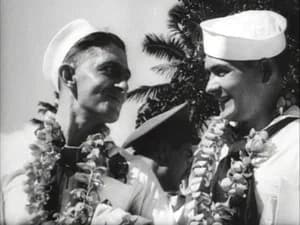
The ubiquitous aircraft carrier of the U.S. Navy goes into the attack in the Central Pacific at the Gilberts and Marshalls, destroying Japanese installations and taking the fight to the enemy. But for all of these, there is a price to pay for victory in men and materiel.

The Allies are victorious in New Guinea as they repel the Japanese. They thus bring the fight through a series of island-hopping offensives using a new ship--the slow but vital LST. The price paid is high in both sides, but as Japanese casualties pile up in their never-ending losing battle against the Allied onslaught, their homeland only hears news of their victory being broadcast on the radio. We see also just how Japan's people are suffering in defeat through a very touching scene of a massive funeral at the conclusion of this segment, providing a balance of how universal grief truly is.

While Hitler's Germany starts its decline, Mussolini's Italy falls. Eventually, as destruction is heaped upon Naples and Rome, Italy accepts defeat and surrenders, allowing the allied forces to liberate their people. But the conflict grinds to a slow ruinous campaign (Salerno, Cassino, Anzio) until final victory is achieved by the liberation of Rome, where ecstatic Romans celebrate freedom waving American flags, and the Pope addressing the audience...
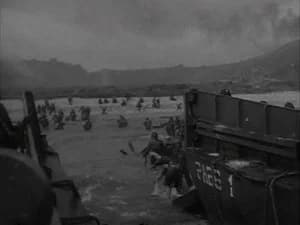
The Allied invasion of Normandy--from preparation to execution--is detailed to very compelling effect courtesy of vintage footage from both sides. One of the most important turning points for victory from the Allied side. Perhaps one of the most exciting episodes of the entire Victory at Sea series--the pivotal moment of World War II in Europe.

The U-Boats are ascendant, and their triumphs trumpeted over Germany. But the Allies hit back with new bases in lands bordering the Atlantic Ocean, new antisubmarine techniques, and the new escort, or "jeep", carrier. Thus, the neutralization and destruction of the German U-Boat forces is guaranteed.

Guam, a U.S. territory, gets invaded by Japan a few days after Pearl Harbor and remains under occupation for two and a half years before the Americans arrive to take Saipan and Guam back, and finished off as well the Japanese fleet in a classic "turkey shoot". The Guamanians are thankful as expressed on their smiling faces, making it one of the most inspiring segments of Victory at Sea. Meanwhile, the Americans are preparing the bases in the islands as well as in other areas of the Marianas for the ultimate bomber offensive against Japan.

Before the Philippines, the United States first attacks Peleliu and Anguar. Through communiques, we follow the bloody battle in its ferocity.

The Japanese fleet is fast disappearing, and the Imperial Navy conducts its last major operation in the Philippines. It ends in debacle: The risen battleships of Pearl Harbor avenge the attack in Surigao Strait, the Center Force is defeated in Sibuyan Sea, the jeep carriers and destroyers heroically fend off a stronger Japanese force near Samar, and their remaining aircraft carriers were sunk. This Victory at Sea segment marked the counting of the days until the Japanese would accept defeat and surrender to the allies.

Just after the U.S. entered World War II, the Japanese conquered the Commonwealth of the Philippines, an American protectorate, bringing despair to its people. But they still hope, and in January of 1945, these were answered as much of the Philippines were liberated and its people cheered the Americans. Their liberation became bloody as they fought their way in Manila, but still they cheered. A touching tribute to the will of the Philippine people to survive as they waited for liberation--and their eventual independence a year later.
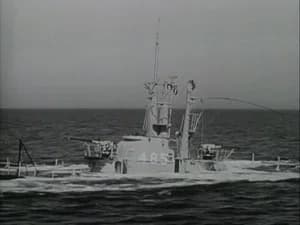
In this episode of Victory at Sea, we see how the U.S. Navy's submarines contributed to the Japanese empire's downfall, sinking thousands of tons of ships, and strangling the Japanese. We see footage of ship upon ship from the House of the Rising Sun destroyed. But a price is paid for those whom the U.S. Navy classifies as "did not return".

Sevastopol was liberated, and the Allies finally crush Germany. We also witness the meeting of Roosevelt, Churchill, and Stalin on final plans for Germany's surrender and the forming of the United Nations. At the end, Hitler commits suicide, and Nazi flags are torn apart and German military uniforms and hats lie on the ground like discarded garbage. However, compelling footage of German cities in ruins make this one of the most triumphant as well as somewhat somber episodes of Victory at Sea.

The United States fought two battles here--the U.S. Marines at Iwo Jima against the Japanese, and the U.S. Navy against the typhoon. During the now-legendary events depicted in this episode, we reach the final throes of battle in the Pacific war against Japan. And as the scene of the recent Mount Suribachi memorial appears, we are once again reminded of the price that comes before true victory can be achieved.

Japan invades China in 1936, but the Japanese are not satisfied, and they began to invade Indochina and Thailand, paving the way for the invasion of Burma. The U.S. and British Navies nurture their relations with the Indian Navy as supplies are building up for the return back. Eventually, it was decided to build a road to link up with the Burma Road, and with human and elephant power, they succeeded. Eventually, they "came back to Mandalay", and the first supplies traveled the road to hordes of cheering Chinese.

In one last ditch effort at glory, having lost most of their best men in military actions, Japan employs suicide pilots--the Kamikaze--men who would willingly crash their planes into ships in order to destroy the American spirit. But the U.S. Navy and Marines are ready for them with their guns, and they fought heroically against the onslaught. And on Okinawa, Americans fight a major battle with the Japanese Army.

The atomic bomb is detonated, and its effects demonstrated at Hiroshima and Nagasaki. With that, Japan surrenders, and their country's diplomats and military officials sign the official surrender documents aboard the USS Missouri. The U.S. armed forces come home to signs saying, "Welcome Home" before they are greeted by mothers, wives, children and fellow neighbors. But before the series come to a close, there is one last parade to march in their honor.

Narrator

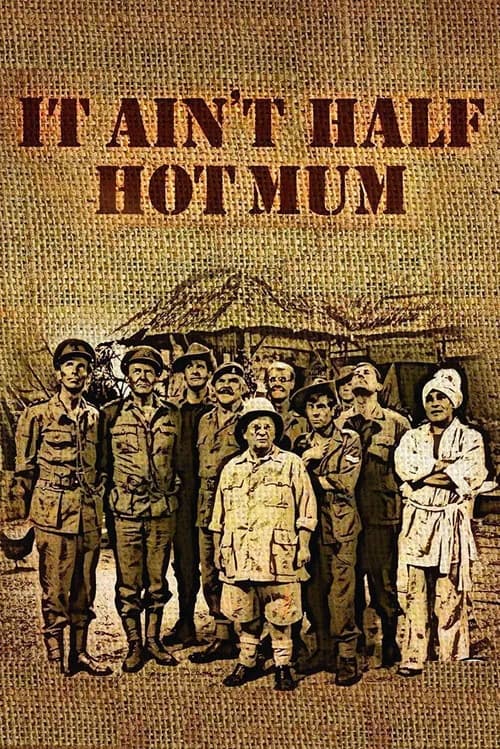
In 1945, during the final months of the Second World War, a group of soldiers perform for the Royal Artillery concert party, with comic acts and musical numbers for others prior to their departure for the frontlines. The party avoids partaking in combat duty; thus, the soldiers love being part of the outfit. Some even daydream of becoming world-famous actors when they leave the army.

Island at War is a British television series that tells the story of the German Occupation of the Channel Islands. It primarily focuses on three local families: the upper class Dorrs, the middle class Mahys and the working class Jonases, and four German officers. The fictional island of St. Gregory serves as a stand-in for the real-life islands Jersey and Guernsey, and the story is compiled from the events on both islands. Produced by Granada Television in Manchester, Island at War had an estimated budget of £9,000,000 and was filmed on location in the Isle of Man from August 2003 to October 2003. When the series was shown in the UK, it appeared in six 70-minute episodes.

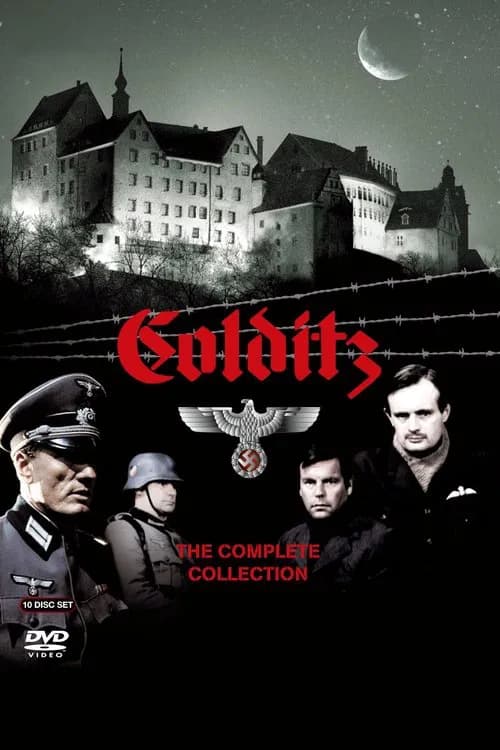
Colditz is a British television series co-produced by the BBC and Universal Studios and screened between 1972 and 1974. The series deals with Allied prisoners of war imprisoned at the supposedly escape-proof Colditz Castle when designated Oflag IV-C during World War II, and their many attempts to escape captivity, as well as the relationships formed between the various nationalities and their German captors.

Over the past 60 years Britain's Special Air Service regiment has carried out a wide variety of clandestine missions - from deep-penetration raiding to hostage release operations - which have made it respected and feared for its professionalism and daring. The SAS prides itself on doing its work in the shadows, never allowing any publicity and never claiming credit for any of its extraordinary achievements. But, over the years, sufficient information has emerged for a picture of the regiment's exploits to be clear. This series uses interviews with former members of the SAS; detailed and painstaking reconstructions; and cutting edge 3-D graphics to recreate seven great missions which show why the SAS is today regarded as the world's leading special forces unit.


From tunnels to towers, artillery sites, resistance nests and communication centers, Nazi Germany left their footprint throughout the world. To this day, silent remains still exist, sentinels guarding clues about plots that Hitler was unable to carry out. The collapse of the Third Reich left as many secrets as it did relics. Still today, remnants of the Nazi's schemes lie concealed in structures scattered across the globe. Skeletons of projects give way to mysteries. Conspiracies abound about science fiction scenarios. The Nazis were nothing if not methodical, and a deeper look reveals even darker plans. From tunnels to towers, artillery sites and communication centers; the remains of these schemes lie waiting to reveal truths about the Fuhrer's tactics and dreams in Secret Nazi Bases. What did Hitler have planned?