Loading titles…
Documentary
Alastair Sooke explores the riches and unique legacy of Greek art.


Alastair Sooke explores the surprising roots of Greek art, beginning his journey in Crete.

Alastair unpicks the reasons behind the revolution that gave birth to classical Greek art.

Alastair Sooke explores the extraordinary afterlife of the Greek masterpieces that changed the course of western culture.

Self - Presenter

Tutored by Aristotle, helpless witness to his father's assassination, and a brilliant, pioneering tactician, Alexander the Great had conquered the known world--and sealed his legacy as one of history's most remarkable rulers--by the age of 25. In the year 334 B.C., 20-year-old King Alexander of Macedonia decided to bring the farthest reaches of the world under one domain. Over the next 12 years, he led a grand army across more than 20,000 miles and eventually brought all of Asia under his control, only to perish from battle wounds at the age of 32. Incorporating dramatic onsite reenactments with high-end computer graphics and the expertise of renowned scholars, THE TRUE STORY OF ALEXANDER THE GREAT is a special presentation from THE HISTORY CHANNEL®, examining the life and career of this military genius, impassioned lover, and fearless leader.

National Geographic's landmark event series, The Greeks, brings together historians, archaeologists, actors, athletes, scientists and artists to launch a groundbreaking exploration into the ancient Greeks' journey - not just to better understand their past, but to discover how their legacy illuminates our present, and will shape our future. The story of the Greeks is the story of us.

Who was Homer, and what is the meaning of The Odyssey? In this documentary we follow the footsteps of Ulysses, also known by his Greek name Odysseus—a hero as relevant today as he was nearly three thousand years ago, on a journey across some of the most fascinating landscapes and seascapes of the Mediterranean region. With the help of prominent international scholars, we seek to resolve the questions that still surround one of humanity’s greatest literary works and its enigmatic author.

Archaeologist and historian Richard Miles traces the development of Western civilization, from the first cities in Mesopotamia to the fall of the Roman Empire. In this six-part series, Miles travels through the Middle East, Egypt, Pakistan and the Mediterranean to discover how the challenges of society -- religion and politics, art and culture, war and diplomacy, technology and trade -- were dealt with and fought over in order to maintain a functioning civilization. Stories are told of disappeared, ruined and modern cities, from ancient Iraq to modern Damascus, to reveal how successes and failures of the ancients shaped the world today.

In the fourth and fifth centuries, B.C., the Greeks built an empire that stretched across the Mediterranean from Asia to Spain. They laid the foundation of modern science, politics, warfare and philosophy, and produced some of the most breathtaking art and architecture the world has ever seen. It was perhaps the most spectacular flourishing of imagination and achievement in recorded history.

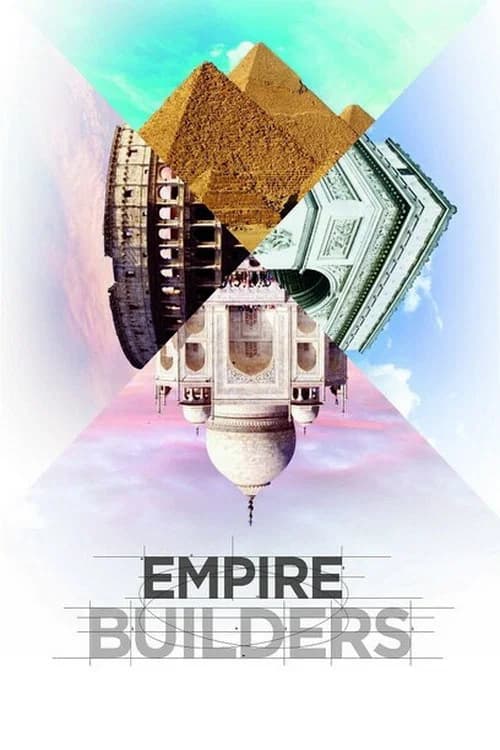
Throughout the centuries great empires have been erected, whose creators have governed nations, regions and continents for hundreds and even thousands of years. From the great civilizations of antiquity to the first world powers of our days, this series reviews the legacy left to us by the great empires that have written the history of humanity. Combining computer-generated images with dramatic reconstructions, experts and historians analyze the role these civilizations have played and how their heritage has survived to this day.

The legends of the Trojan War and the lost city of Troy captivated countless generations. More than 150 years after the discovery of Troy, what new insights can modern archaeology offer? Could the legends, in fact, preserve memories of the catastrophic decline and fall of Bronze Age civilization itself?

Explores every aspect of Sparta's culture, lifestyle, history and legacy. Author Steven Pressfield reflects on the significance of the Battle of Thermopylae, where a force led by 300 Spartan warriors stalled the advance of a hundred-thousand-plus strong Persian army for nearly a week. Scholars explore the factors that drove the Peloponnesian city-state to strive for martial excellence. Ancient accounts explain how Sparta's warriors were trained and detail their prowess in battle.

Historian Bettany Hughes has embarked on an epic, personal journey. Inspired by Homer's The Odyssey, she will sail the unpredictable Mediterranean seas, tracing Odysseus's long journey home. Her mission: to experience what the Greek hero experienced and to uncover truths behind the myths and legends, all while enjoying the delights of ancient Greece today. Follow her 1,700-mile adventure as it takes her to over a dozen islands and 22 historic sites and puts her through two hair-raising storms and even an earthquake.