
Loading titles…
Documentary
This is the story of two wars fought at the same time on opposite ends of the globe, often mislabeled as a single war: The Second World War. These conflicts remade our world in just a few decades. A story of how the rise and fall of great powers, from Nazi Germany to Imperial…

WWII may have concluded decades ago, but for those who fought, the memories are endless. To understand, we start with Churchill's "Gathering Storm."
Japan's unprovoked invasion has plunged China into war. In Europe, Mussolini and Hitler's expansions threaten neighboring nations.
After six relatively quiet months of the Phony War, German forces add a new term to the vocabulary of warfare: Blitzkrieg.
Six months after the fall of France, Molotov visits Berlin to discuss victory. He may think Britain is defeated, but there's still more to the story.
It's 1941, and Britain is holding its own despite being under threat from the German army; Japan takes WWII global; "Barbarossa" transforms the war.
Before 1941 was over, the Soviet Union was locked in a struggle with Germany, and humanity would be hanging on the fate of Roosevelt's great union.
It took Hitler half a war to form an empire, but all gained would be lost in the second half. Japan's growth also takes a fall.
During WWII, Germany and Japan plotted to team up in the Indian subcontinent to make a massive territory, but setbacks in 1942 shook plans.
Over a succession of conferences, the UN planned out the post-war world. For the Allied and Axis powers, 1943 would mark the beginning of the end.
Between 1943 and 1944, significant events shifted power from the Axis to the Allies, and the Allies' strength would grow in the East.
The Allies break out of Normandy, the Red Army advances, and the invasion of the Philippines will bring troops one step closer to attacking Japan.
Germany and Japan's aggression may have started the war, but by 1944 their armies succumbed to pressure from the Allies.
After years of war, the defeat of Hitler and the Third Reich is inevitable. Peace in Asia will follow after the detonation of the atomic bomb.
No cast information available.

Over the past 60 years Britain's Special Air Service regiment has carried out a wide variety of clandestine missions - from deep-penetration raiding to hostage release operations - which have made it respected and feared for its professionalism and daring. The SAS prides itself on doing its work in the shadows, never allowing any publicity and never claiming credit for any of its extraordinary achievements. But, over the years, sufficient information has emerged for a picture of the regiment's exploits to be clear. This series uses interviews with former members of the SAS; detailed and painstaking reconstructions; and cutting edge 3-D graphics to recreate seven great missions which show why the SAS is today regarded as the world's leading special forces unit.


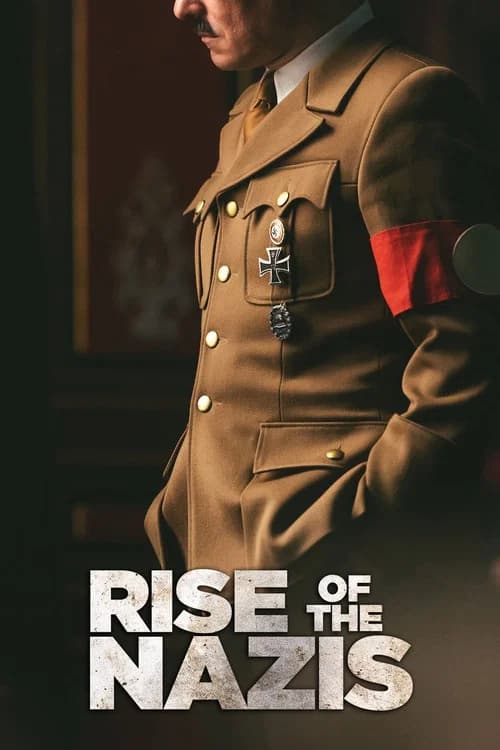
How did 20th Century Europe's most liberal democracy fall into the hands of fascists? From Hitler's political scheming that turned Germany's parliament into a House of Cards, his War on Truth leading to book burning, and his scapegoating of minorities, this series explores in extraordinary detail the events leading up to the outbreak of World War II.


From tunnels to towers, artillery sites, resistance nests and communication centers, Nazi Germany left their footprint throughout the world. To this day, silent remains still exist, sentinels guarding clues about plots that Hitler was unable to carry out. The collapse of the Third Reich left as many secrets as it did relics. Still today, remnants of the Nazi's schemes lie concealed in structures scattered across the globe. Skeletons of projects give way to mysteries. Conspiracies abound about science fiction scenarios. The Nazis were nothing if not methodical, and a deeper look reveals even darker plans. From tunnels to towers, artillery sites and communication centers; the remains of these schemes lie waiting to reveal truths about the Fuhrer's tactics and dreams in Secret Nazi Bases. What did Hitler have planned?

A four-part history series examines relations between Nazi Germany and Finland in the 1930s and 1940s. The series explores how the close relationship between Finland and Germany was born and developed, and what was known in Finland about the Holocaust, the mass extermination of the Jews at a time when the countries were at war together. Through archives and expert interviews, it explores how close Finns were to the Nazi German leadership.

In June 1941, Hitler decides to break the German-Soviet pact and set the German army in motion toward Moscow. From summer to winter, and from Kiev to Leningrad, previously unseen archival footage, some recolored, retraces the bloodiest military operation of World War II. Testimonies from soldiers and civilians recount these endless months of battles and sieges.


